The Science of Relationship Decay and How to Prevent It
Relationships naturally weaken when communication decreases. Fortunately, relationship decay is predictable and manageable with timely re-engagement.
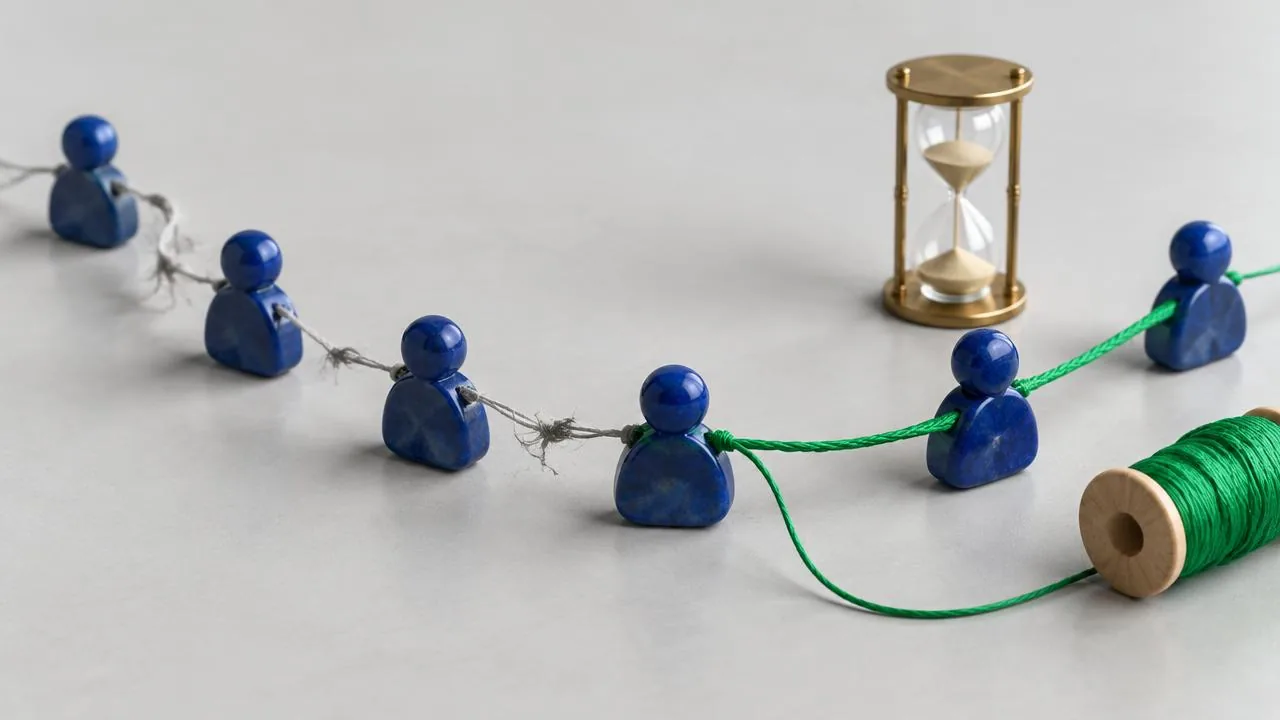
Relationships are valuable assets in life and business. They provide support, opportunity, and connection. However, connections naturally weaken over time without consistent effort. This process is a common challenge, but it is not inevitable.
You can prevent relationship decay with proactive and consistent effort. This involves regularly checking in, sharing relevant information, and acknowledging important milestones. A systematic approach ensures that your most important connections remain strong and don't fade away from neglect.
Why Do Relationships Decay?
Relationship decay is the natural process where the strength and closeness of a connection weaken over time. This happens for many understandable reasons. Our lives get busy, priorities shift, and we move to new locations. Without active maintenance, the frequency of our interactions decreases. These interactions are the foundation of any strong relationship.
Think of a relationship like a plant. It needs regular watering and sunlight to thrive. If you forget to water it, it will slowly wither. Similarly, relationships need regular attention. Shared experiences and mutual support act as the "water" that keeps them alive. When you stop creating new shared memories or offering value, the connection's foundation starts to crack. Research in social networks confirms this. The strength of a social tie is directly influenced by how often you interact and how meaningful those interactions are.
How Can You Recognize the Signs of Decay?
Catching relationship decay early makes it much easier to manage. The signs are often subtle at first. Being aware of them allows you to act before a connection goes completely dormant.
Look for these common warning signs:
- Decreased Communication Frequency: You used to talk weekly, but now it's monthly or less. The rhythm of your connection has slowed down.
- Superficial Conversations: Your talks used to be deep and personal. Now, they are mostly limited to surface-level updates. You're catching up on facts, not sharing feelings or ideas.
- One-Sided Effort: You are the only one initiating contact. If you stopped reaching out, you feel the communication would stop entirely.
- Hearing News Secondhand: You learn about a major life event, like a promotion or a family milestone, from a social media post instead of from them directly.
- Hesitation to Reach Out: You feel a sense of awkwardness about getting in touch because it has been too long. That hesitation is a clear sign that distance has grown.
Recognizing these signals is the first step. It gives you a chance to re-engage before the relationship fades completely.
How Can You Actively Prevent Relationship Decay?
Preventing decay requires a deliberate and thoughtful strategy. It is about turning good intentions into consistent habits. Fortunately, the actions are simple and manageable.
Here are five practical steps to keep your relationships strong:
1. Schedule Your Communication
Don't leave communication to chance. Your memory is not a reliable tool for managing dozens of important relationships. Use a calendar or a task manager to set reminders.
- Action: For your most critical contacts, set a recurring reminder to check in every 4-6 weeks. For others, a quarterly check-in might be enough. A simple calendar event like "Email Sarah K." can make all the difference.
2. Share Value, Not Just Updates
The strongest connections are mutually beneficial. Think about what the other person cares about. Share things that are relevant to their goals, hobbies, or challenges.
- Action: Did you read an article about their industry? Send it with a short note: "Saw this and thought of your work on the new project." Did you see a job opening that fits their skills? Forward it. This shows you are thinking of them and their success.
3. Remember and Acknowledge Milestones
Remembering a birthday, work anniversary, or promotion shows you care. These small gestures have a huge impact. They make people feel seen and valued.
- Action: Use a system to track these important dates. When the day comes, send a personal message. Avoid a generic "Happy Birthday!" on a social media wall. A short, direct email or text message is far more powerful. For example: "Happy work anniversary! It's been amazing to see all you've accomplished this past year."
4. Offer Help Proactively
Don't wait to be asked for help. If you see an opportunity to offer assistance, take it. This builds a deep sense of trust and reciprocity.
- Action: If a contact mentions they are struggling with a problem, think about how you can help. Could you introduce them to someone who can solve it? Do you have a resource or tool that might be useful? A simple offer like, "I know a great graphic designer if you need one," can be incredibly helpful.
5. Be a Good Listener
When you do connect, make the conversation about them. Ask thoughtful, open-ended questions. Listen more than you talk. People appreciate being heard.
- Action: Instead of asking "How are you?", try "What's the most exciting thing you're working on right now?" Then, listen intently to the answer and ask follow-up questions.
How Can a System Help You Manage Relationships?
Relying on memory alone to manage your network is a recipe for failure. A Relationship Operating System can help you identify dormant relationships and encourage timely re-engagement. This is where tools like a simple CRM come in.
A personal or simple CRM helps you organize your contacts and track interactions. It provides the structure needed to be consistent. A Simple CRM AI can flag connections that are going quiet. It analyzes your communication patterns and prompts you to reconnect at the right moment.
This systemization is not about being cold or robotic. It is about ensuring your good intentions translate into real action. It removes the mental burden of trying to remember who you need to talk to and when. It empowers you to be a more thoughtful, reliable, and connected person. By using a system, you ensure that your most important relationships never quietly fade away.
Key takeaways
- Relationship decay is a natural process caused by decreased interaction over time.
- You can prevent decay with proactive, consistent communication and maintenance.
- Recognize early signs of decay, such as less frequent or more superficial conversations.
- Practical prevention steps include scheduling check-ins, sharing value, and celebrating milestones.
- Using a system like a personal CRM can automate reminders and help you stay on track.
FAQ
How often should I contact someone?
This depends entirely on the nature of the relationship. For close professional colleagues or mentors, a check-in every 4-8 weeks is a good baseline. For broader network contacts, once a quarter or twice a year can be effective. The key is consistency. Choose a frequency that feels authentic and sustainable for you.
What if a relationship has already faded?
It's almost never too late to reconnect. The key is to be genuine and acknowledge the time that has passed. Send a simple, low-pressure message. For example: "Hi [Name], I know it's been a while, but I was just thinking about our conversation about [topic] and wanted to say hello. I hope you're doing well." Don't make excuses; just be warm and authentic.
Is using a tool to manage relationships impersonal?
A tool is only as personal as the person using it. Using a CRM or a reminder system isn't about automating your friendships. It's about creating a safety net to ensure your good intentions don't fall through the cracks. The tool handles the logistics (remembering dates, flagging silence), so you can focus on the human part: crafting a thoughtful message and having a meaningful conversation. It's a way to be more reliable, not less personal.
Related articles
Try Simple CRM AI free
A dedicated AI agent for every client — follow-ups, reminders, and insights handled for you.
Start Free Trial